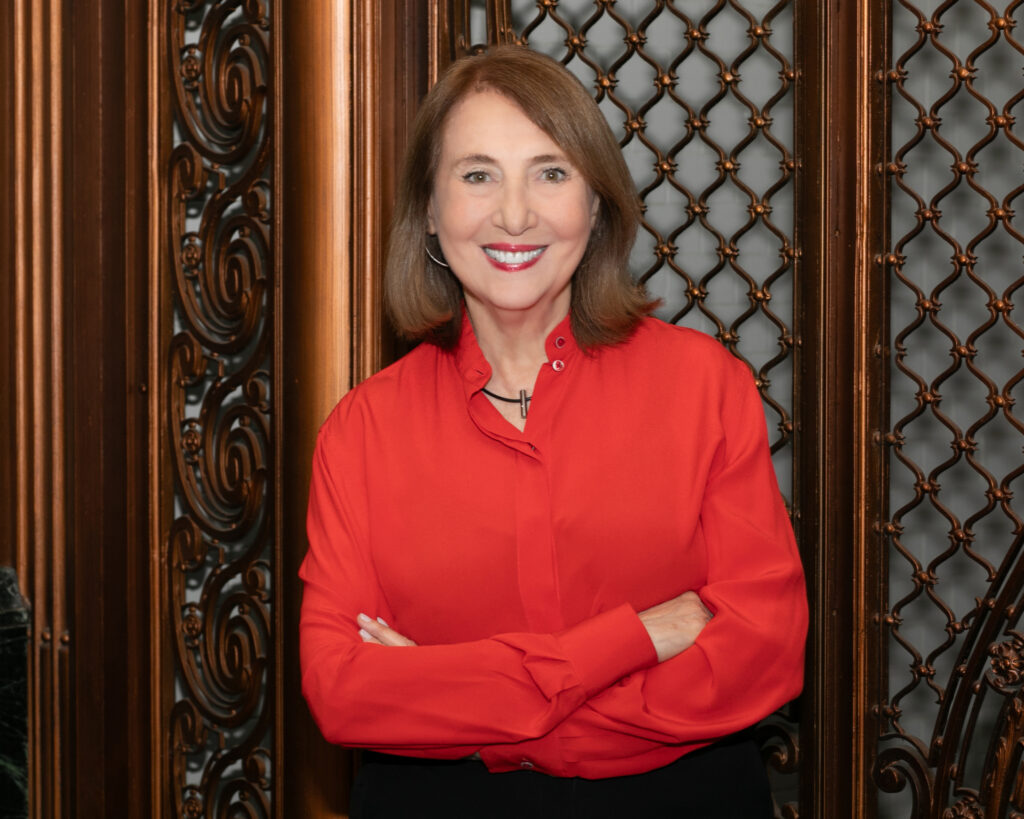
admincathy

Project Information Literacy: How Disruption and Distraction Are Remaking Learning

Project Information Literacy recently interviewed Cathy about the power of disruption and distraction for re-making the K-20 classroom.  Read the full article below or visit the website here.     Cathy Davidson: How Disruption and Distraction Are Remaking Learning Project Information Literacy, “Smart Talks,” no. 18, February 25, 2014   There is little doubt why Project Information Literacy: How Disruption and Distraction Are Remaking Learning

Thrilled and Honored to Lead Futures Initiative at the Graduate Center, CUNY

NEW YORK, February 24, 2014 — The Graduate Center, City University of New York, has announced that leading interdisciplinary and technology scholar Cathy N. Davidson will join its faculty effective July 2014. Professor Davidson is currently the John Hope Franklin Humanities Institute Professor of Interdisciplinary Studies and the Ruth F. DeVarney Professor of English at Thrilled and Honored to Lead Futures Initiative at the Graduate Center, CUNY

HASTAC’s #FutureEd: An Update on an Amazing Project

Here is an update about the amazing #FutureEd Initiative from Hilary Culbertson, Program Manager for HASTAC:   Dear Colleagues, I wanted to offer an update on HASTAC FutureEd Initiative, taking place around the world this semester! Some seventy courses, conferences, and reading groups around the world are participating in this remarkable project with discussions and HASTAC’s #FutureEd: An Update on an Amazing Project

Chicago Humanities Summit: Cathy Davidson and Peter Jagoda Do Digital Humanities Right

Cathy Davidson and Peter Jagoda were recently invited to a leader a workshop at the Chicago Humanities Summit, a part of the larger Chicago Humanities Festival.  The following notes were taken on the session:    Session #3 – How to Do Digital Humanities Right  Facilitator: Cathy N. Davidson (Duke University) Moderator: Patrick Jagoda (University of Chicago Humanities Summit: Cathy Davidson and Peter Jagoda Do Digital Humanities Right

How Does Higher Ed Contribute to Income Inequality and How Can We Remedy The Problem?

An essential difference between higher education in the U.S. and most of the rest of the world is that the “sort” of who will or won’t go to university and the sort for what field one will study at university begin far earlier elsewhere.   Between the ages of ten and sixteen (depending on the country), How Does Higher Ed Contribute to Income Inequality and How Can We Remedy The Problem?

What If We Could Design Higher Ed from Scratch?

What if we could start all over again and design higher education from scratch?  What would a university look like if there were no legacies from medieval knowledge traditions, Enlightenment epistemologies or taxonomies, or Industrial Age requirements, regulations, departments, majors, minors, distribution requirements, professional schools, or standardized assessment metrics, or contemporary problems ranging from defunding What If We Could Design Higher Ed from Scratch?